Allandale Fixed Its Pool This Year. The Duck Pond Never Recovered.
Walk the loop around Northwest Park on a summer morning and you'll notice two things at once. The pool is packed. The pond next to it is not much more than mud and a few stranded ducks picking through what's left of the shallows. Most people assume this is drought, or neglect, or the kind of thing that happens to old city parks when nobody's paying attention. It isn't. The pond is drying up because the pool got fixed, and the two have been mechanically connected since the Eisenhower administration.
That single fact says more about how Allandale actually works than any list of new restaurants could. This is a neighborhood that looks unchanged from the street, but underneath the surface, things are wired together in ways that only reveal themselves when one part gets renovated and the other part quietly stops functioning.
For decades, the duck pond at Beverly S. Sheffield Northwest District Park ran mostly on borrowed water. Filtration discharge from the pool, plus groundwater pumped out of the pool's mechanical room, supplied as much as 80 percent of what kept the pond full. The groundwater piece turned out to be its own quiet surprise. It wasn't runoff or rainfall doing the work. It was an underground leak, feeding the pond for years without anyone treating it as anything other than normal.
Once the pool went into construction, that discharge stopped. So did the leak's contribution. The pond, which residents had assumed was a self-sustaining wetland, turned out to be a byproduct of pool maintenance the whole time.
Longtime visitors noticed immediately. One neighbor who has been coming to the park since childhood put it simply to a Fox 7 Austin reporter covering the story:
"a good, safe place to come to... for years and years and years"
Austin Parks and Recreation is working with the city's Watershed Protection Department on a fix, and in the meantime staff are watering nearby trees and taking steps to protect the wildlife that depended on the pond. The 2022 Vision Plan for the park still lists possible pond enhancements as a future priority, but any real solution is waiting on funding and a feasibility study, not a firm date. For now, the honest answer is that nobody has restored the pond, and nobody has said exactly when they will.
The pool itself tells a more finished story, and it's worth knowing the history to appreciate what just happened. The city bought the land in 1955 and had the pool and its circular bathhouse built within a year. It opened for its first swim meet on July 28, 1956, with a formal dedication two weeks later. At 50 meters, it was Austin's first Olympic-size pool, which meant the city could finally qualify to host national swim meets. In its first full month of operation, it drew more than 31,000 visitors, enough to outpace even Barton Springs at the time.
That circular bathhouse, with its open-air dressing rooms, is now considered architecturally significant enough to be eligible for the National Register of Historic Places, which is part of why the renovation team treated preservation as a real constraint rather than an afterthought. The pool reopened to the public on April 27, 2026, with a ribbon-cutting ceremony three days later. The 50-meter footprint stayed the same. What got added around it did not: a zero-entry toddler pool, two shade structures funded in part by the Austin Parks Foundation, new bench seating, a renovated bathhouse and family restrooms, upgraded fencing and lighting, and a new entrance plaza with fresh landscaping.
The park isn't done changing shape, either. A separate $450,000 project is replacing the playground, with design and community input running through August 2026 and construction expected to start that winter. The plan specifically calls for preserving two features residents care about: the Miller Melberg "Turtle" sculpture and its seat wall, both of which predate most of what's being rebuilt around them.
Put together, Northwest Park in 2026 is a place where the oldest, most historically protected pieces got the gentlest treatment, and the part nobody was tracking, a pond nobody realized was artificially fed, is the one still unresolved.
A mile or so east, Burnet Road has been running its own version of the same story: water underground causing headaches nobody saw coming.
Austin's second H Mart, at 5222 Burnet Road, was first announced back in August 2023 and has been under construction ever since. The building sits on an elevated slab supported by piers over what used to be a detention pond, and a structural failure in the southwest section forced crews to cut out old concrete, add steel reinforcement, and pour an entirely new slab. That single fix cost the project four to five months. Add in reported payment disputes between the general contractor and subcontractors, and a store that was supposed to be straightforward took nearly three years to reach the finish line.
By early May 2026, crews had installed glass doors and windows near the entrance, with filings still targeting a completion date of May 31, 2026. By late June, the company was posting on Instagram about becoming part of shoppers' weekly routines, a sign the store was nearing its debut, but as of the most recent public reporting, H Mart still hadn't announced an exact opening date. At 23,125 square feet, it's considerably smaller than the chain's original Lakeline location, which opened in February 2018, and community speculation suggests it will skip the food-hall format in favor of grocery essentials. It's also arriving into an established corridor rather than an empty one. Hanyang Market has served Korean shoppers here for years, and 99 Ranch Market sits about 2.5 miles away, so the new store is joining a neighborhood that already knows how to shop for these ingredients rather than introducing the idea from scratch. Some residents have raised the obvious concern: Burnet Road already runs tight during commute hours, and a full-size grocery store will add to that. The CapMetro Rapid 803 and Route 3 buses both stop near the shopping center, for anyone looking to skip the parking lot entirely.
Compare that timeline to the newest thing on the corridor. The 8312 Burnet Artisan Market, a monthly outdoor market set up in the parking lot of Neon Belly Coffee & Bakery, went from public announcement to opening day in about three weeks. It held its first Sunday market on August 2, and the plan is to keep running the first Sunday of every month through December before picking back up in spring 2027. Admission is free, dogs are welcome, and the lineup leans toward local vendors selling art, jewelry, and small-batch food and drink.
It's a useful contrast. A grocery chain with corporate backing needed three years and a structural rebuild to open its doors. A single coffee shop needed a parking lot and three weeks to launch a recurring community event. Burnet Road can move at both speeds depending on what's being built.
Set against all this construction, the parts of Allandale that haven't changed are worth naming, because they're the reason the neighborhood still feels like itself despite everything happening at its edges. Fonda San Miguel has been serving its version of interior Mexican cuisine here for decades. Yard Bar has been pouring drinks for dogs and their owners since 2015. The Shoal Creek Greenbelt Trail still cuts through the middle of the neighborhood, linking schools, parks, and the same shopping strips that are now getting a grocery store and a monthly market. The neighborhood's Fourth of July parade has run since 1960, older than most of the houses that line its route.
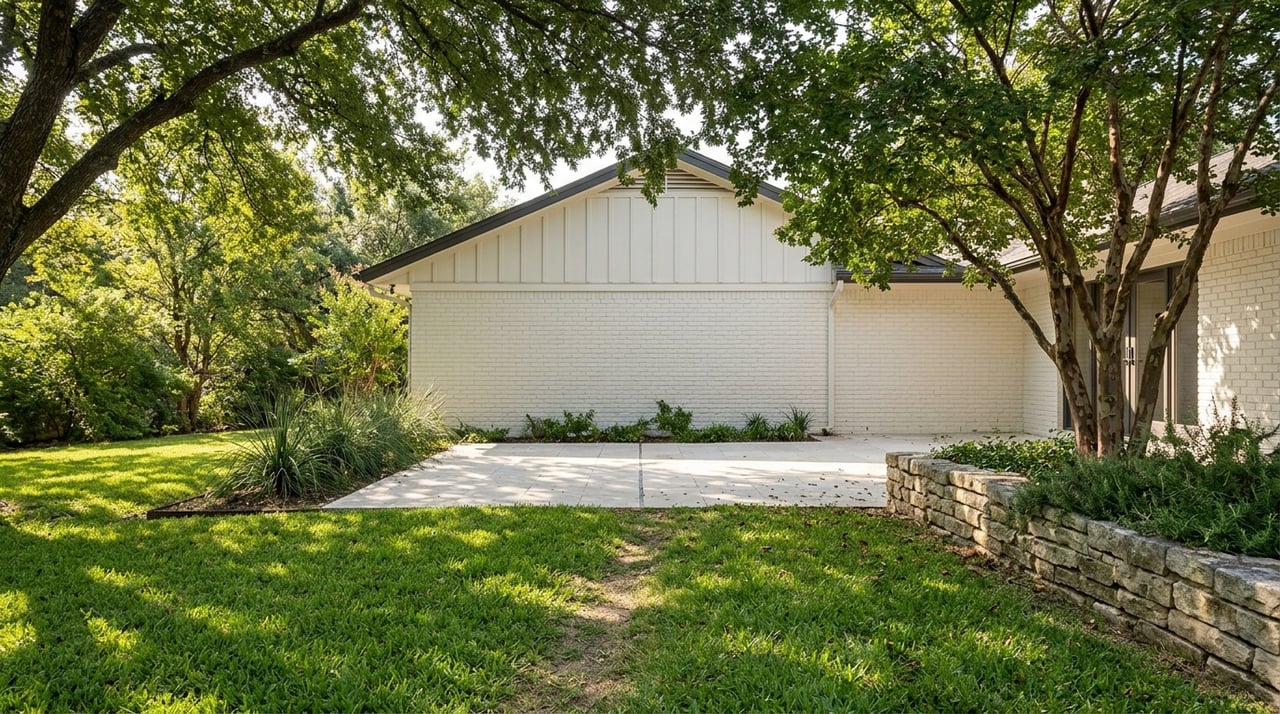
Those houses, mostly ranch, bungalow, and Craftsman homes built through the 1950s and 60s on large, tree-shaded lots, are the other constant. Some infill has brought in modern custom builds over the past decade, but the bones of the neighborhood, wide lots and mature trees, have stayed put while everything around them got renovated, relocated, or in the pond's case, quietly disconnected from its water supply.
That's the actual shape of change in Allandale this year. It doesn't happen all at once, and it doesn't happen evenly. A pool gets a careful, historically minded rebuild. A pond loses its water source as an unplanned side effect. A grocery store fights a foundation for three years. A coffee shop launches a market in three weeks. None of it touches the trail, the parade route, or the restaurants that have anchored Burnet Road since before most of this construction started.
If you're watching these changes because you're curious about what's next for a house in this neighborhood, or you're weighing what a lot with mature trees and a walkable corridor like this one is actually worth right now, Volt Realty knows this stretch of Austin block by block. Let's talk.
Stay up to date on the latest real estate trends.
You’ve got questions and we can’t wait to answer them.