Buying a Teardown in Tarrytown? The House's Age Decides Your Timeline, Not the Price Tag
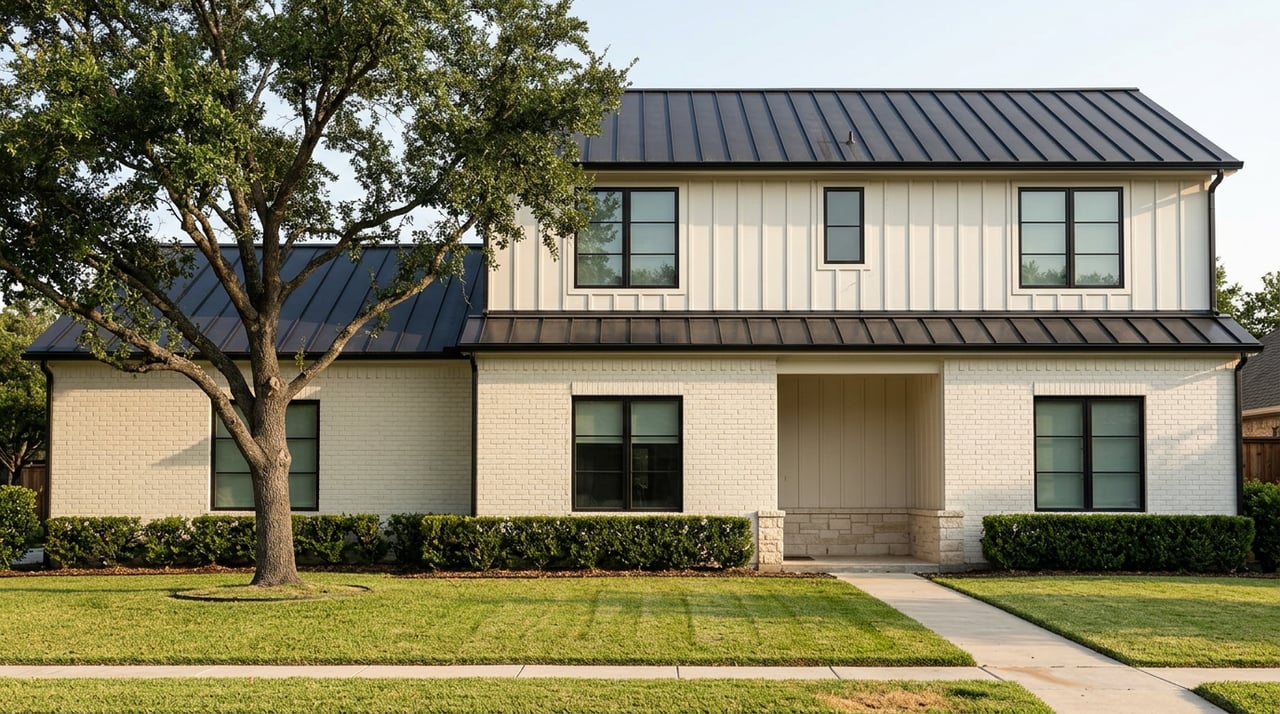
As reported by Austin Monitor, in 2015, a couple bought a house on Bowman Avenue in Tarrytown with a simple plan: tear it down and build something new. The Historic Landmark Commission had other ideas at first. Commissioners voted to initiate historic zoning on the property against the owners' wishes, a move that would have blocked demolition entirely. It took a second hearing, a house inspector's assessment that the structure was beyond economical repair, and testimony from a neighbor who pointed out that only three of the ten closest homes on the block still existed in their original form, before the commission reversed course and let the demolition proceed.
That neighbor, Steve Baker, put it plainly to the commission, as reported by Austin Monitor: "I am tired of construction in my neighborhood, but we welcome the construction next door."
The couple's experience shows why understanding what the city's process requires is an important part of planning a rebuild in Tarrytown.
Most conversations about buying a teardown in Tarrytown start with land value. In a neighborhood where architecture ranges from 1920s cottages to 1950s ranches to contemporary new builds, often on the same block, land frequently accounts for well over half of a property's total value, sometimes two-thirds or more. That math is real and it matters. It explains why a modest, dated house on a good interior lot can carry a seven-figure price tag with no serious buyer planning to keep the house standing.
What that math leaves out is time. A buyer who prices the land correctly but doesn't price the permitting calendar can end up holding a lot for months longer than expected, carrying financing costs on a property that isn't producing anything while a commission calendar catches up.
Here is the mechanism most buyers don't know to ask about. The City of Austin requires Historic Preservation Office review for any residential structure 45 years or older before a demolition permit can move forward. That threshold sounds like it would apply to a small slice of older, architecturally distinct homes. In Tarrytown, where a meaningful share of the housing stock dates to the 1920s through the 1960s, it applies to most of the lots buyers are actually looking at.
The review itself starts quietly. If you apply for a demolition permit, the application is routed internally to Historic Preservation Office staff, and if the house doesn't rise to the level of a potential landmark, you may never notice the extra step. But if staff flags the property as potentially significant, the case gets referred to the Historic Landmark Commission, and the buyer finds out about a public hearing they didn't know was on the table.
There's a second threshold layered on top of the first, and it's the one buyers confuse with the 45-year rule. According to Preservation Austin, the Historic Landmark Commission, an 11-person body appointed by City Council and the mayor, formally reviews demolition permits for any building over 50 years old inside local historic districts, National Register districts, or with individual landmark status. So a 1978 ranch and a 1958 ranch can face genuinely different review paths depending on which side of that second line they fall on, and depending on whether the specific block sits inside a designated district.
None of this means a teardown in Tarrytown is a bad idea. It means the calendar looks different than a standard remodel or a rebuild on a non-infill lot. A few specific frictions to plan around:
Tree protection can move your footprint before you draw a single wall. Any tree 19 inches or greater in diameter is protected under the city's tree ordinance, and work that impacts more than 25 percent of a protected tree's canopy or root zone triggers its own permit review. On a mature, tree-canopied lot, that can push a planned structure several feet in a direction the buyer didn't anticipate.
Adjacent-property notification is mandatory, not optional. Before a total demolition can begin, the city requires a pre-demolition inspection and notice to adjacent residential property owners. That step exists specifically so a neighbor doesn't wake up to a demolition crew with no warning, and it adds real time to the front of any project.
A referral to the Historic Landmark Commission means a public hearing, not a form. If Historic Preservation Office staff flags a property as potentially significant, the case doesn't get resolved by paperwork. It goes to a commission meeting, on the commission's calendar, not the buyer's.
If a lot in Tarrytown has an existing structure on it and a teardown is part of the plan, a few questions are worth answering before the offer goes in, not after closing:
None of these questions are unusual to ask. They're just easy to skip when a lot looks straightforward from the street.
Does every old house in Tarrytown require a public hearing before it can be demolished? No. Most demolition applications for structures 45 years or older are reviewed internally by Historic Preservation Office staff and never escalate. A public hearing before the Historic Landmark Commission only happens when staff flags a property as potentially significant, when the property sits inside a designated historic district where commission review is required by rule, or when a building over 50 years old has individual landmark status.
Does being inside a National Register district mean a house can't be torn down? Not automatically. City of Austin guidance says National Register status adds a review step, while the Texas Historical Commission says National Register listing alone does not prevent demolition. Each address needs to be checked individually.
How would a buyer find out if a specific Tarrytown address has any of this history already attached to it? Prior Certificates of Appropriateness, demolition applications, and code cases are worth checking and worth checking before writing an offer, alongside a straightforward conversation with someone who works this neighborhood regularly and has seen how these cases tend to move.
If you're weighing a fixer-upper, a rebuild candidate, or a lot with an older structure in Tarrytown, this is exactly the kind of groundwork Volt Realty walks through with buyers before an offer goes in, not after. Let's talk.
This article is general information, not legal, tax or financial advice. Consult a qualified professional about your situation.
Stay up to date on the latest real estate trends.

You’ve got questions and we can’t wait to answer them.