The Second HOA Nobody Mentions Until You're Under Contract in Circle C Ranch
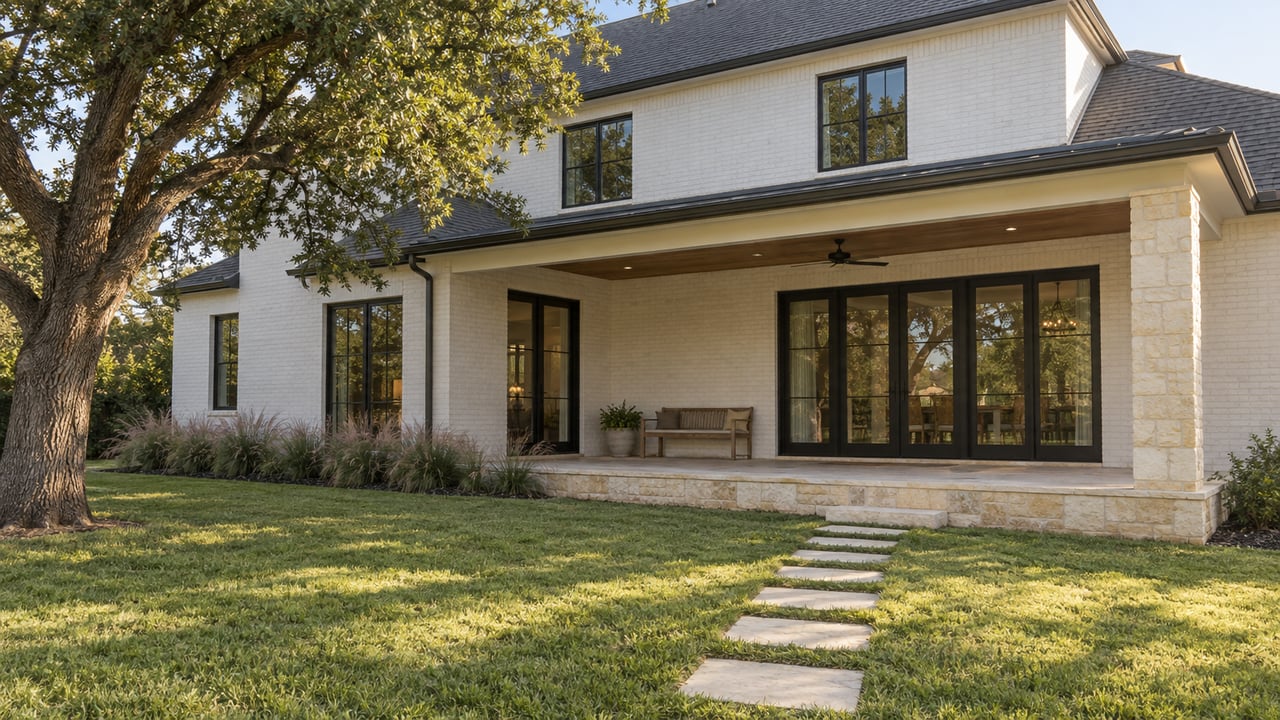
A buyer under contract on a home in Circle C Ranch typically orders one resale certificate; for a home in a gated section, the buyer should order two.
The Circle C Homeowners Association, the master association that covers the neighborhood's pools, trails, and common parks, issues one certificate. But seven separate gated communities sit inside Circle C, and each one runs its own association with its own dues, its own architectural rules, and its own certificate. A buyer who only pulls the master CCHOA paperwork can close on a house without knowing what the gated section actually charges, or what its board actually restricts. Grey Rock, one of those gated sections, runs a completely separate HOA with dues that sit apart from the master assessment. The home two streets over, outside any gate, answers to the master CCHOA alone.
This matters because Circle C gets talked about as one neighborhood with one median price. It is not one governance structure, and the price alone will not tell a buyer which one they are joining.
The master CCHOA assessment funds the amenities most people associate with Circle C: two pool complexes, more than 15 miles of trails, sports courts, and a community center, all for roughly $600 to $800 a year. That is a reasonable number for what it buys, and it is the figure most listing sheets quote.
What the listing sheet does not always carry forward is the second assessment. Homes in Circle C's gated sub-communities pay dues to their own association on top of the master fee, covering maintenance, repairs, and additions specific to that gated section. Two buyers looking at similarly priced homes, one inside a gate and one outside it, are not comparing the same total carrying cost. They are comparing a single fee against a stacked one, and the difference does not show up until someone orders both certificates.
The practical fix is straightforward: before writing an offer on any home in Circle C, confirm in writing whether the property sits inside one of the gated sub-associations, and if so, request that association's resale certificate separately from the master CCHOA's. The fee structures differ enough that skipping this step is the kind of gap that surfaces at closing, not before.
The property tax rate on homes in Circle C moved from 1.9818% for the 2024 tax year to 2.0465% for 2025. On a $700,000 home, that shift adds a few hundred dollars a year on its own, which is not the headline. The headline is what that rate is being compared against.
Circle C sits in Austin ISD. A short drive away, Lake Pointe carries a property tax rate closer to 1.6%, because it falls in Lake Travis ISD rather than Austin ISD. That is close to half a percentage point of difference on the same purchase price, which on a $700,000 loan works out to real annual dollars, not a rounding error. The trade a buyer is actually making when they choose Circle C over Lake Pointe is not master-planned amenities against lakeside setting in the abstract. It is a specific, recurring, compounding tax rate difference against a specific school district boundary and a specific commute pattern.
Neither number is right or wrong. The point is that a buyer comparing the two neighborhoods off a median price alone is missing the line item most likely to move their monthly payment.
Circle C's housing stock spans the late 1980s through the early 2000s in its original sections, with newer construction clustered along Slaughter Lane and in the Meridian subdivision pushing closer to $1 million with updated systems and open floor plans. That range matters more than it looks like on paper, because homes from the original build era frequently carry $30,000 to $60,000 in deferred maintenance, roofing, HVAC, and windows that have quietly aged out, and that cost rarely shows up in the asking price.
A home priced at $650,000 in one of Circle C's original 1990s sections and a home priced at $650,000 near Meridian are not the same $650,000. One of them is asking a buyer to absorb a mid-five-figure repair bill within the first few years of ownership. The other has likely already had that work done, and the price reflects it. A pre-offer inspection focused specifically on roof age, HVAC replacement dates, and window condition is the way to find out which one is in front of you before the number on the listing becomes the number in the contract.
Circle C is routinely cross-shopped against a small set of Southwest Austin and Hill Country communities, and the comparison sharpens what the median price is hiding.
Reunion Ranch in Dripping Springs looks like a peer on paper, with larger homes and a median price around $850,000. But homes there carry a median 42 days on market, against roughly 16 days in Circle C over the same recent 12-month stretch. That gap says something about demand relative to inventory that the price tag alone does not. A buyer willing to negotiate has more room in Reunion Ranch than in Circle C, where a well-positioned home is more likely to draw competition.
Shady Hollow, in the same ZIP code and the same Austin ISD boundary as Circle C, sells at a median around $620,500, roughly $169,000 below Circle C's own median. The trade is the absence of a master-planned amenity system and the parks, pools, and trails that come with the CCHOA assessment. For a buyer who does not plan to use those amenities heavily, that $169,000 gap is effectively the price of infrastructure they may rarely touch.
None of these numbers argue for one neighborhood over another. They argue that the median price quoted for any single one of them is a starting point, not a conclusion, and the real comparison happens at the level of tax rate, HOA layering, and housing stock age.
Is this specific address inside a gated sub-association, and if so, which one? The master CCHOA certificate will not answer this. Ask the listing agent directly and confirm with the gated association's management company before assuming the fee on the listing sheet is the only fee.
What year was the roof, HVAC, and windows last replaced? In a neighborhood built out over three decades, this single question separates a fairly priced home from one carrying a hidden repair bill.
Which ISD and which appraisal district actually apply to this parcel? Circle C sits in Austin ISD and is served by the Travis Central Appraisal District. A few blocks in either direction can put a property in a different district entirely, which changes the tax math independent of the sale price.
How does the days-on-market figure for this specific section compare to the neighborhood median? A 16-day median across all of Circle C can mask a much faster or slower pace within a single subdivision like Avana or Wildflower Park. Ask for section-specific data, not just the neighborhood-wide number.
Circle C Ranch rewards a buyer who treats the median price as the first data point in the search rather than the last one. The neighborhood's own homeowner documentation confirms the two-tier HOA structure, the Travis Central Appraisal District publishes the tax rate history that shows exactly how much the bill moved between 2024 and 2025, and a straightforward pre-offer inspection settles the deferred maintenance question before it becomes a post-closing surprise.
If you are comparing Circle C against Lake Pointe, Reunion Ranch, or Shady Hollow, or trying to figure out which gated section's paperwork you actually need before writing an offer, Volt Realty can walk through the specific numbers for the specific address you're looking at. Let's talk.
This article is general information, not legal, tax or financial advice. Consult a qualified professional about your situation.
Stay up to date on the latest real estate trends.
You’ve got questions and we can’t wait to answer them.