Lakeway Waterfront Is Recovering Fast. The Dock Permits Are a Different Story
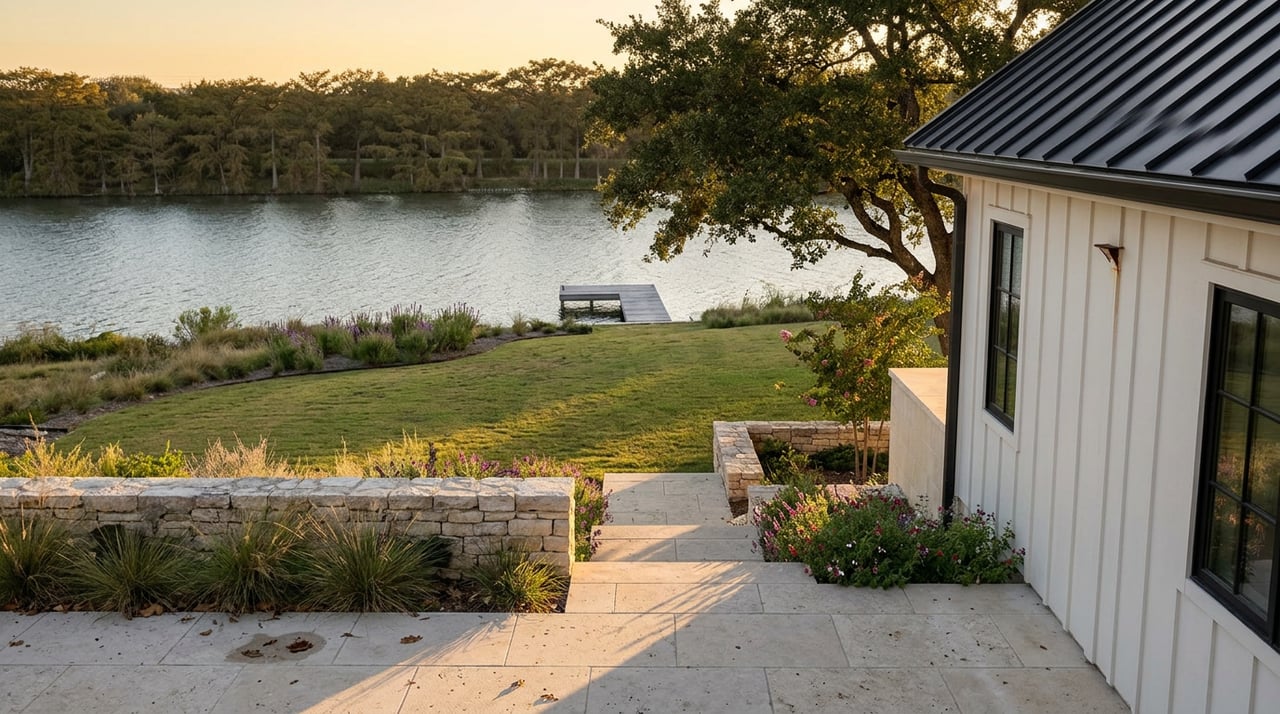
According to the Austin American-Statesman, in 2019, a developer in Lakeway's Rough Hollow community built a ten-slip community dock at the mouth of Little Rough Hollow Cove, backed by a permit from the Lower Colorado River Authority that classified the structure as a "community marina." The dock had been running for months, tram and all, ferrying residents down to the water, before the city discovered nobody had applied for a City of Lakeway building permit. The dock was shut down. The tram was switched off. The developer faced fines, including a $10,000 penalty tied to the variance request it then had to file, and the whole arrangement landed in front of the city's zoning commission to settle whether a ten-slip dock counted as a marina under Lakeway's ordinances.
Nobody involved was cutting corners in secret. The LCRA had signed off. What got missed was that the LCRA's approval and the City of Lakeway's approval are two separate reviews, run by two separate agencies, that don't automatically talk to each other.
That gap matters more in 2026 than it has in years, because the lake itself just moved. Lake Travis sat at a drought low of 626.93 feet above sea level in October 2023. As of late August 2026, it sits at roughly 679.75 feet in elevation, about 96 percent of capacity by stored volume, just a few feet under the conservation pool mark of 681 feet. That's close to 53 vertical feet of recovery in under three years, on a reservoir where none of the Highland Lakes hold a constant level by design. A dock that sat on cracked mud in 2023 may now be floating in fifteen feet of water. The paperwork behind that dock did not change with the lake.
Buyers touring Lakeway waterfront tend to treat the dock the way they treat the pool or the three-car garage, a feature that comes bundled with the house. It's closer to a separate asset with its own permit history, sitting in two different filing systems.
LCRA does not require a permit, registration, or fee for a residential dock of 1,500 square feet or less, though it still has to meet LCRA's safety standards for the Highland Lakes. Cross that threshold and the math changes. Any dock over 1,500 square feet needs an LCRA permit, and the City of Lakeway requires a copy of that LCRA permit. The city then charges its own separate fee on top, spelled out in its adopted fee schedule: $250 for a private dock, $750 if the structure gets classified as a commercial dock or marina.
| LCRA | City of Lakeway | |
|---|---|---|
| Dock ≤ 1,500 sq ft | No permit, fee, or registration required | May still require a city building permit and site plan |
| Dock > 1,500 sq ft | LCRA permit required | Requires a copy of the LCRA permit plus its own $250 private dock fee ($750 if classified as a marina) |
| Community or multi-slip dock | Can be permitted as a "community marina" | Can trigger separate marina zoning review under city ordinance |
The Rough Hollow case sits in that last row. What LCRA cleared as a community marina still needed its own hearing in Lakeway's zoning process, because the city treats a multi-slip structure serving more than one owner differently than a single homeowner's private dock.
There's a second assumption worth checking before anyone gets attached to a listing photo of a dock. Owning lakefront property doesn't automatically entitle an owner to build or keep one. LCRA is explicit that a buyer needs to confirm they own the submerged land under the water, verified through the deed filed at the county, before assuming dock rights transfer along with the house. If someone else owns that submerged parcel, the new owner needs that party's permission to build or maintain a dock at all.
The same caution applies to retaining walls along the shoreline, which matter more this year given how much shoreline is underwater again after the 2023 drought exposed long stretches of it. LCRA's current lakewide permit for Lake Travis specifically excludes new retaining wall construction from what it authorizes. A retaining wall isn't a landscaping upgrade to quietly add after closing. It requires its own review under LCRA's dredge-and-fill and watershed rules, separate from whatever authorized the dock or the house itself.
None of this is academic. Local estimates put the value a properly permitted dock adds to a Lakeway waterfront property at $75,000 to $150,000 or more, which means the permit file functions as a real line item in the sale price, not paperwork trivia.
That may explain something odd in the current listing data. Snapshots of the Lakeway waterfront market taken at different points in 2026 don't line up with each other nearly as neatly as the rest of the city's housing stock does. One count of waterfront listings from earlier this spring put roughly two dozen homes on the market at a median list price near $749,000, sitting an average of about 121 days, close to four months. A more recent snapshot counted closer to 38 waterfront listings at a median near $825,000, averaging around 54 days. Both are plausible readings of the same thin market. Waterfront in Lakeway runs to only a few dozen listings at any given moment, and a handful of sales with resolved permit files versus a handful still working through them can swing an average by months. Compare that to the broader Lakeway market, where the median sale price over the three months ending June 2026 came in at $835,000 with homes selling in an average of 56 days, a tighter, more predictable number than waterfront ever posts on its own.
Price alone doesn't explain that spread. A cleared LCRA permit, a matching city dock permit, and a deed that actually includes the submerged land turn a listing into a fast sale. Missing paperwork turns the same house into a much longer negotiation, whatever the sign in the yard says.
That gap shows up across price tiers too. As of mid-2026, Rough Hollow's private, deeded waterfront runs roughly $1.8 million to $4 million or more, while non-waterfront homes in the same community with shared marina access run $750,000 to $2 million depending on lot and amenity proximity. Older sections of Lakeway built in the 1970s through 1990s are seeing slower interest unless the homes have been substantially updated. In every tier, the difference between a house with a clean dock file and one without isn't cosmetic.
A few steps separate a straightforward closing from a months-long permit chase.
If the lake is nearly full right now, does that mean every dock on the market is usable? Not necessarily. A dock can be structurally sound and permitted correctly and still sit in shallow water depending on its exact spot in a cove. Water level tells you about access. It doesn't tell you about paperwork.
What happens to dock access if the lake drops again? Nothing about the permit changes when the water does. LCRA's safety standards and the underlying permit stay in place regardless of elevation. What changes is whether the dock reaches usable water, a separate, practical question from whether it's legally authorized.
Can I make a repair to an existing dock without new approval? The safest move is asking the city and LCRA directly before assuming a repair is exempt.
Waterfront on Lake Travis is one of the more resilient corners of the Austin market, and the current water level makes now a genuinely good time to look. Just don't let the view do the underwriting. If you're weighing a Lakeway waterfront purchase and want a straight read on a specific dock's permit history before you write an offer, Volt Realty can help you pull the right records before you fall for the wrong photo. Let's Talk.
This article is general information, not legal, tax or financial advice. Consult a qualified professional about your situation.
Stay up to date on the latest real estate trends.

You’ve got questions and we can’t wait to answer them.